
Remembering educator Susie Wheeler
Between 1917 and 1932, some 5,000 lovingly designed and constructed Rosenwald Schools were built for rural African American children throughout the South [see “Bearing Witness: The Rosenwald Schools“]. They constituted a network of educational training camps in which minds were fed and nourished against the dark backdrop of legalized segregation. As such, they helped to lay the groundwork for the civil rights movement. (more…)
Bearing witness: the Rosenwald Schools
By Jamil Zainaldin
By 1917 the Reconstruction that was to have secured freedom and equal opportunity for 4.5 million former slaves in the South had vanished. In its place was the vision of a “New South” that promised commercial success for the crippled region and profit aplenty for northern industry.
Marring that vision, however, was the Jim Crow system built upon the legal separation of the races that was affirmed by the U.S. Supreme Court in Plessy v. Ferguson. By the second decade of the 20th century, most of the region remained an agriculture-dominated society that suffered from economic, educational, and cultural poverty and deprivation.
The poorest of the poor were African Americans who lived in the country, for whom the dream of freedom was virtually extinguished. Public education in the South was generally lacking for everyone, including most whites, but the minimal support for rural black schools (where they even existed) was appalling.
And yet, during the next 15 years, one man was responsible for planting some 5,000 seeds (242 of them in Georgia) in the soil of the rural South that helped to set in motion a reform movement to challenge the moral legitimacy of racial segregation. That man was Julius Rosenwald, and the history of the Rosenwald Schools is a powerful if somewhat hidden story that deserves new light.
Born in 1862 and raised in Springfield, Illinois (within a few blocks of Abraham Lincoln’s home) during the Lincoln presidency, Rosenwald as a young man learned the clothing trade in New York and then made his way to Chicago. There, with his brother, he started a mail-order business targeted toward rural markets that would become the highly successful Sears, Roebuck and Company.
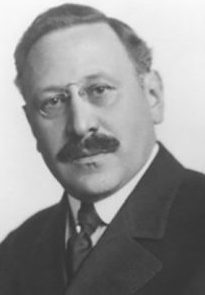
Julius Rosenwald
In 1912 he accepted the offer to serve on the board of Tuskegee Institute in Alabama from its president, Booker T. Washington. Influenced by Reform Judaism, Rosenwald easily embraced the cause of educating the South’s former slaves and their children. He also greatly admired Washington’s gospel of self-help, personal initiative, and industrial schooling.
Rosenwald and Washington shared the belief that racial segregation worked its greatest harm through the perpetuation of inferior education and yet were convinced that it was in the realm of education that racism could most successfully be countered. Both were leery of challenging head-on so entrenched a system as Jim Crow. Instead, they cautiously sought a strategy to work “inside” the political reality of the South to improve education that would include soliciting the cooperation of local public school authorities as well as concerned whites.
Working closely with Tuskegee Institute’s Clinton J. Calloway, who coordinated applications and grants, Rosenwald and Washington’s first step was to fund the building of six experimental rural schools in Alabama. Washington died in 1915, soon after the launching of this venture, but two years later, Rosenwald used his personal wealth to create a new philanthropic foundation. In today’s language, the primary goal of the Julius Rosenwald Fund was to perfect and “take to scale” the Tuskegee Institute model. As envisioned from the start, it would provide the architectural plans and oversight for locally constructed and indeed beautifully designed school buildings, shops, teacher cottages, and even privies in the South’s most disadvantaged rural areas.
It was not a give-away program. Grants had to be matched by contributions from the local black communities as well as from “friendly whites” and local public school districts. The latter’s buy-in was important because the so-called Rosenwald Schools were public schools.
“It is one of the great fundraising stories of history,” says Martin Lehfeldt, former head of the Southeastern Council of Foundations in Atlanta. The grinding poverty of African Americans in the South was actually exceeded by their generosity. Between 1917 and 1932, they contributed $4.7 million of their own money, plus countless hours of sweat equity, to match $4.3 million in grants from the foundation. More than 5,000 schools, teachers’ homes, and shops were built, including 242 schools in Georgia. In 1928 Rosenwald Schools accounted for 20% of all rural southern schools.
The model blueprints for one-story Rosenwald Schools (buildings varied in size and capacity) adhered to progressive design principles of simplicity with purpose-built form and function. Standing out like “civic churches,” Rosenwald Schools were instantly recognizable in their country settings. The beautifully finished and freshly painted structures with gable roofs and batteries of windows announced the presence of community gems, a tangible assertion of dignity and equality. Schools doubled as meeting places and also as venues for local recreational activity (baseball diamonds appeared on some school grounds).
Rosenwald died in 1932, and the fund, whose assets already had been depleted by the stock market crash three years earlier, wound down its activities. (Rosenwald also had stipulated that he did not wish to create a perpetual trust.)
Although nearly invisible a century later, the Rosenwald Schools bear witness to the struggle for human dignity. In the segregated rural South, community-built Rosenwald Schools offered thousands of children and their parents not only educational opportunity but also civic lessons in character building, discipline, community cohesion, and the example of leadership—precisely the ingredients of the successful civil rights movement that came later.
The State Historic Preservation Division, the Georgia Trust, the National Trust for Historic Preservation, and the Georgia African American Historic Preservation Network have worked to identify, document, and preserve Georgia’s historic Rosenwald Schools, many of which went out of use in the modern era. With the assistance of state preservationist Jeanne Cyriaque (now retired, and a former Georgia Humanities board member), local communities to date have identified 52 of the 242 schools built in Georgia, and preserved and restored about one-third of them.
One such school about which we know a great deal is the Noble Hill School in Cassville, between Atlanta and Cartersville. Dr. Susie Wheeler, a 2007 recipient of a Governor’s Award in the Humanities, was a first grader at Noble Hill the year it opened in 1923. She completed her schooling, attended college, and eventually earned a doctorate from Atlanta University. During her long career she served as a Jeanes supervisor and curriculum director. When the state’s schools integrated, she moved into the position of Bartow County’s curriculum supervisor. According to historian Thomas Scott, “She played a major role in making integration work in that county.” Wheeler led the effort to restore the school, which reopened as a museum and community center.
This all-too-brief history of the Rosenwald Schools merits a Georgia postscript:
Even as this remarkable story was unfolding, a future president of the United States, stricken with polio, was making Warm Springs his second home. Before his election to the presidency, he promised the black residents of that town that they would get a Rosenwald School. In 1937, after his election, his Georgia friends gently reminded him of his pledge to them. Although the Rosenwald Fund had not made a school grant since 1932, President Franklin Roosevelt placed a call to Samuel Smith, who now headed the fund. Soon, Warm Springs had a new Rosenwald School—the last to be built in the South. Fittingly, it was named for another champion of equality: Eleanor Roosevelt.
This article appeared in an earlier form as part of “Jamil’s Georgia” on the SaportaReport.
Jamil Zainaldin is president emeritus of Georgia Humanities.
The “forever” of Flannery O’Connor — the lasting influence of a Southern Gothic writer
Life, if we let it, can become a pressure cooker. We never seem satisfied by what we have or where we’ve gotten. There’s one more rung on the ladder to climb, one more recognition we think we deserve, one more promotion or accolade. Some of us — sometimes it seems like our entire popular culture — are like characters in a video game or reality show, dodging challenges as we graduate to the next level of play. But where is it we have arrived when all is said and done?
Sometimes answers come in very small packages, like short stories or novels. The art of Georgia writer Flannery O’Connor lies in her ability to condense the heaviest of thoughts about life and purpose into the commonplace of stories. In 2015 the U.S. Postal Service issued a Flannery O’Connor “Forever” postage stamp. It is an occasion well worth noting, not only for the literary world but also for the reason that many others now will discover and read her for the first time.
Usually described as “Southern Gothic,” O’Connor’s stories are sometimes viewed as a regional flowering of the post-World War II era, or as a chapter in a 20th-century Catholic intellectual movement that included such world-class figures as Dorothy Day, the French writers Simone Weil and Teilhard de Chardin (paleontologist and priest), and Louisiana novelist Walker Percy (he and O’Connor were friends).
There is urgency in O’Connor’s faith and fiction. She believed “everything works toward its true end or away from it, everything is ultimately saved or lost.” Life is a deadly business, and the fate of one’s soul is the driving force in her stories and novellas. We do not arrive on this earth ready-made and “good.” Humankind’s embedded egoism and delusions constantly conspire to blind us to the truth of things. Awakening us was her mission, and those literary darts dipped in the odd and the ugly were her weapons. Humanity’s only true refuge is in the divine.
Born in Savannah in 1925, O’Connor moved with her family at the age of 12 to Milledgeville, her mother’s hometown. Her father, the most important figure in her early life, suffered from lupus so debilitating that work became increasingly difficult. He died when she was 15.
O’Connor was drawn to stories and the printed word as a child. While a student at Milledgeville’s Georgia College for Women (today, Georgia College and State University), she experimented with cartooning in the campus newspaper, drawing from (it must be said) a delightfully warped humor to convey the truth she saw behind the most ordinary of things. A shy person but not without friends, she headed “north” (her words) after graduation to the University of Iowa, where she eventually settled into the now world-famous Writers’ Workshop. Thus begins the opening chapter of a career wholly dedicated to the art and craft of literature, ending only with her premature death from lupus at age 39.
The author of the short-story collection A Good Man Is Hard to Find and the novels Wise Blood and The Violent Bear It Away, O’Connor had but a brief presence on the national literary scene. Yet she won early recognition and in some circles fame as a writer whose themes mined the depths of her Catholicism in her own “Christ-haunted” land.
She was in much demand as a speaker, but her illness mostly prevented travel. To have achieved such literary prestige based on such a substantial yet slim body of work before her death is pretty remarkable for any time and place.
My favorite story, and the last she wrote, is “Parker’s Back.” Parker is something of a drifter in life, unhappily married and working at odd jobs for country neighbors. He saves his money for the pool hall and another tattoo (his body is covered with them). The most important tattoo of all, the one that holds the key to his fate, is on his back. Out of his sight, it follows him wherever he goes (the tattoo is an image of a “Byzantine Christ” with “all-demanding eyes”). The story concludes with a convulsive and tearful confrontation that brings Parker to his knees, hinting finally at the possibility of union, of wholeness as a new day breaks.
The grotesque elements of her stories, set mostly in the rural South, seem to distance her fictional world from the reader. But one can say that too of other great writers, like Dostoevsky or George Eliot or Herman Melville.
Perhaps it is because of the distinctive worlds of a small town in Russia, or a 19th-century English shire, or a Nantucket whaling boat that we are able to see their universality. “All fiction is about human nature,” O’Connor would say. “Whenever I’m asked why Southern writers particularly have a penchant for writing about freaks, I say it is because we are still able to recognize one.”
How will she be received by a new audience in a 21st-century world of lightning-speed communication that chops up our stories and etherizes “place” — the very things that make her work so potent? Don’t be surprised at a Flannery O’Connor boomlet, or maybe even a revival. She would be alternately amused and appalled by that, I expect, for it was the forever that she cared most about.
This article appeared in an earlier form as part of “Jamil’s Georgia” on the SaportaReport.
Jamil Zainaldin is the president emeritus of Georgia Humanities.
R-e-s-p-e-c-t—what August Wilson earns
Love, honor, beauty, betrayal, duty. We know these as essences of life. They are also at the heart of the stories told in the poetry and plays of the great, late August Wilson (1945-2005). He won two Pulitzer Prizes for drama, and among his best-known works are Fences, The Piano Lesson, and Ma Rainey’s Black Bottom. Set largely in the black working-class community of his native Pittsburgh, Pennsylvania, his plays commemorate the individuality of his characters, and in so doing bridge the differences among races to create a mutual recognition. Wilson penetrates both the mind and the heart. (more…)
FDR—the face of the New Deal in Georgia
By Jamil Zainaldin
When the Great Depression hit Georgia in the late 1920s, most of its population barely noticed, given that the state’s own economy still suffered from the ruin of the Civil War.
Sharecropping had become a way of life for many farmers, black and white. In addition to poverty and the plague of pellagra, there were also massive agricultural impediments due to large-scale land erosion, resulting from long-standing poor farming practices.
And then there was the other kind of plague, that of a cash-crop economy, cotton, making practically everyone dependent on the erratic swings of market prices and the weather, a situation that worsened when the boll weevil came.
Franklin Roosevelt understood all of this, because he lived on the land in rural Georgia and built a home in Warm Springs, the only one he would ever build for himself.
Depression and desperation brought on by polio led him to Warm Springs in 1924 to try the “healing waters” of a resort owned by his friend George Foster Peabody, of Columbus, Georgia. Only Roosevelt himself can know what exactly transpired in his mind, but the result of the water treatment was nothing less than a new lease on life.
Warm Springs, henceforth, became the home of his heart.
He loved traveling the backcountry roads in his specially equipped car and meeting farmers working the land. From this, he learned firsthand of Georgia’s problems, and he sought to understand their causes. He embarked on a self-education program, helped along by his friend and neighbor, Cason Callaway, who had experimented on his own land by employing modern agricultural practices of diversification and crop rotation.
When Roosevelt became president in 1933, Georgia remained an imprint in his mind of what ailed the nation—and what many in the nation needed: rural electrification, modern agricultural practices, education access, improved public health, and jobs.
The programs of the New Deal responded to the social crisis of the Great Depression. We know that only the Second World War would pull the nation out of its virtual economic collapse, but Roosevelt’s energy, his incantation that “the only thing we have to fear is fear itself,” restored the nation’s ailing spirit, put millions to work, propped up farmers, and set new standards for minimum wage and hours requirements.
Although many welcomed the financial investment in the South’s economy, some of Georgia’s politicians in the 1930s actively campaigned against the New Deal programs as contrary to “our way of life.” Factory and mill owners especially worried about the impact of wage-and-hour regulation.
And because his New Deal policies of support for labor unions and black workers and their families met intractable opposition from political leaders like Georgia governor Eugene Talmadge, Roosevelt moderated his position. As New Georgia Encyclopedia author Kaye Minchew points out, such resistance to parts of the New Deal was hardly unique to Georgia, as Jim Crow had long since lodged itself in the law and constitutions of all the southern states.
In hindsight, what is extraordinary about Roosevelt in Georgia is how much support of the general mass of the voting population he retained.
Roosevelt won Georgia by generous margins in all four of his presidential elections—even as these same voters supported politicians at odds with his policies. He traveled and spoke around the state, and set up his philanthropic polio foundation in Warm Springs. His funeral train’s procession gathered masses of supporters at every station it passed through in Georgia in 1945.
As president, it was Roosevelt who led an isolationist nation into preparation for war. It is hard to imagine any other politician of the time doing so. After Pearl Harbor, the nation’s path was set. It was his leadership of the Allied coalition that ensured the outcome of the war.
One might ask, what if Roosevelt had never ventured to Georgia in 1924? What would have happened to him? Would he have received the healing he so desperately needed? Would he have ever experienced firsthand the trials thrust upon hard-working, but poor, people by circumstances beyond their control?
If he had not learned about the sufferings of Georgians by listening to those he met on trips around the countryside, could he have truly grasped the extent of personal suffering the Great Depression was causing nationwide?
Would he have emerged from his polio strong enough and wise enough to take on the problems of this country and then to take it out of isolation into an all-consuming war that was necessary in hindsight?
Just as he emerged from the isolation of his illness and learned to engage with the world again, as Warm Springs had allowed him to do, Roosevelt as president helped lead the country out of its isolation into a worthy fight.
Without U.S. involvement in the war, what would have happened to the world?
When I visit Warm Springs today and gaze upon the preserved healing pool that brought Roosevelt here, it is with an awesome appreciation that I am also stepping into sacred civic space.
To Warm Springs I say, the free world forever is in your debt.
This article appeared in an earlier form as part of “Jamil’s Georgia” on the SaportaReport.
Jamil Zainaldin is the president of Georgia Humanities.
How the invention of Georgia’s cotton gin changed the world
By Jamil Zainaldin
Around 1785, planters along the coast of South Carolina and Georgia began importing high-quality cotton from the West Indies and learned to successfully cultivate the crop that made Caribbean planters, merchants, and slave traders rich.
Thus began a critical development in the history of slavery in the United States.
Merchants valued Sea Island cotton, as it came to be called, for its exceptionally good, silky quality. Sea Island cotton, a “long staple” variety, was also economical to grow using slave labor, since the process of removing its seeds by hand was not difficult. The coastal slave-based cotton plantations in Georgia and South Carolina flourished, with exports to the North and to England and France making their owners wealthy.
There was one problem with long-staple cotton, however; it could be grown only in coastal climates. The alternative for non-coastal lands in Georgia was “upland” or Mexican cotton, a “short-staple” variety.
Natives grew this species for centuries in North America, as well as in Egypt and North Africa, where it has a long history in the weaving of apparel and rugs.
The downside of short-staple cotton, at least for commerce, was its labor intensity; it was a slow and painstaking process to remove the seeds by hand. This made short-staple cotton more an article of household use than a marketable commodity. Long-staple cotton was a better variety for market.
In 1793 Catharine Greene, the widow of the noted Revolutionary War general Nathanael Greene, invited Eli Whitney to her Mulberry Grove plantation, just outside Savannah in Chatham County, to serve as a tutor. Whitney, a Massachusetts native, had just graduated from Yale University. While at the Greene plantation, Whitney learned of the problems of harvesting short-staple cotton.
This budding mechanical genius, according to New Georgia Encyclopedia author Edward Hatfield, devised a hand-cranked box-like machine (a “cotton engine” or “gin”), consisting of wire teeth set in a wooden cylinder that, when rotated, separated cotton fibers from the seed. A second cylinder turned in the opposite direction to sweep the fibers, undamaged, from the wire teeth. Other gins existed, and had for centuries, but Whitney’s invention worked well on short-staple cotton and was mechanized. He promptly patented it on his return to New England—too late, as it turns out, to prevent massive infringement. With a gin, a single slave could do the work that previously required as many as twenty slaves. Practically overnight, the ability to plant and profitably harvest short-staple cotton with the labor of slaves made cotton the new gold—and there was so much land.
By 1830 the South, slavery, and short-staple cotton became synonymous as the gin and wave after wave of settlers spread through Georgia, pushing out the Cherokee and Creek. Cotton and slavery followed them into Alabama, Tennessee, Mississippi, the Louisiana Territory, and Texas.
America’s first global commodity, the fine white cotton fiber became the sought-after article of commerce for local as well as New England and European textile mills, those beachheads of the modern Industrial Revolution.
And it was the flow of cotton capital that helped subsidize the nation’s railroads, steamships, and locomotives, too, along with making planters, bankers, ship owners, and merchants in the North and South wealthy.
What might Georgia, the South, and the nation have looked like without the development of the mechanized cotton gin—Mulberry Grove’s peculiar gift to the world?
Of course it is possible, and maybe even likely, that someone else would have happened upon the trick. Thrift-minded farmers could be entrepreneurial, and ingenious, too, where a dollar was to be had.
But what if there had been no mechanized cotton gin at the beginning of the new nation’s southward and westward expansion?
The institution of slavery likely would have dwindled, maybe even died out. As new territories opened up in the southern interior, Native Americans willing to cultivate farms might well have avoided expulsion (the Cherokee were already adopting agriculture). It is even possible that southern society would have evolved as a multiethnic farming region, with Indians, Europeans, and emancipated African Americans living side by side.
Moreover, owing to the absence of investment capital, the industrialization of the North might have been slowed. Could this have changed the outcome of the two twentieth-century world wars?
Without a thriving institution of slavery, there may have been no Republican Party of 1854, or President Abraham Lincoln or secession of the Southern states or President Jefferson Davis. Imagine a bucolic rural scene—the kind that inspired landscape painters in eighteenth-century France and England—and you may have the idealized picture of an American South without cotton.
Ultimately, it was the muscular capital generated by the South’s massive, slave-based cotton economy that helped finance the industrial might of the North, which greatly aided it in defeating the Confederacy and abolishing slavery. Surely this is one of history’s ironies.
The vestiges of cotton, slavery, and the Civil War continue to reach into our present, as today we approach the 150th anniversary of the Civil War and the 50th anniversary of milestone civil rights events.
An important piece of that history comes to rest on a spot of land in Chatham County, commemorated solely by a historical marker as Mulberry Grove plantation, the place where Whitney transformed the cotton economy.
Today, on what formerly was Mulberry Grove plantation, the Lummus Corporation has built its new corporate headquarters (relocated from Columbus). And what does the Lummus Corporation do? It is a world-manufacturing leader in the gin and textile machinery industry. The gin, we might say, has come home.
The story of the cotton gin is a reminder of the role of singular events in human history, the place of accident (what the scholar Nassim Nicholas Taleb calls “black swans”), the consequences of intended as well as unintended acts, and the connectedness of all things.
Imagine the United States and the world today if Whitney had not made his journey to Georgia.
Ask yourself: What am I doing that may affect the course of history?
This article appeared in an earlier form as part of “Jamil’s Georgia” on the SaportaReport.
Jamil Zainaldin is the president of Georgia Humanities.
Radical southern women: Eliza Frances Andrews and Katharine Du Pre Lumpkin
By Jamil Zainaldin
Two spirited Georgia women of the post-Civil War era are remarkable for the clarity of their voices, their roots in the state, and their achievements. If in some ways they are alike, they are also profoundly different.
Eliza Frances (“Fanny”) Andrews was born in 1840 in Wilkes County; Kathryn Du Pre Lumpkin was born in 1897 in neighboring Oglethorpe County. Each benefited from the prominence of their families. Each lived long and productive lives of much consequence — lives bound up with place and time that make them uniquely southern and Georgian. But they came to different conclusions on race, one of the burning issues of their day. Andrews was a white supremacist; Lumpkin was an advocate of racial equality.
How do we explain such variances as we look back on the paths taken in personal lives, and paths not taken?
Fanny Andrews enjoyed the carefree childhood of one born into the pre-Civil War world of southern privilege. Her father was a highly regarded judge; he also owned 200 slaves, a cotton plantation, and “big house” in the influential community of Washington, in Wilkes County. There, Andrews received a classical education at the local academy and afterward, earned a degree from LaGrange Female College (today LaGrange College). She read French, Greek, and Latin, and had close familiarity with the classics of English, French, and American literature.
The Andrews family associated with the elite of the countryside — the Toombses, Semmeses, Tuppers, Barnetts, and Ficklens, Georgia’s ruling class.
The state’s secession from the Union divided her family, as it did many in Georgia. Her father opposed secession, believing it would be the ruination of the South and of their privileged lives, a position he never veered from. Nevertheless, secession fever swept up the rest of their household, including Andrews and her siblings (three of whom served in the Confederacy).
Near the end of the war, Andrews began keeping a diary, one that in time made her famous. With an insider’s view, she proved a talented writer and astute observer. Her War-Time Journal of a Georgia Girl, 1864-1865 is one of the truly important published diaries of the Civil War home front. Filled with equal parts praise and vitriol, she sang the virtues of the Confederacy and the slaveholding South and damned the Yankees as she painted a picture of a war-torn home front.
In the words of New Georgia Encyclopedia editor John Inscoe, her diary is especially notable for the description of “her harrowing retreat from her home in Washington; as [Sherman’s] Union forces approached, she moved across ravaged areas to find refuge at her sister’s plantation in the southwestern part of the state.”
Returning home in April 1865, she documented Confederate president Jefferson Davis’s passage through Washington while being pursued by federals, the eventual Union occupation of her town, and the freedmen of the county who flocked to the Union encampment, leaving behind their former masters. And she describes the wandering masses of Confederate soldiers after Lee’s surrender, passing literally through their back yard, most on foot with no provisions, tattered clothes, and homes as far away as Texas.
The diary is filled with Andrews’s fiery, spirited persona that surely contributed to Margaret Mitchell’s depiction of the character Scarlett O’Hara (Andrews’s hair was red, incidentally). It is hard to imagine that Mitchell, a journalist and writer, would not have read War-Time Journal (published in 1908), a well-known book written by a respected female author from her own state.
After the war, with her family “near-penniless,” Andrews (also not unlike Scarlett) set out on her own. In her diary she announces that marriage “is incompatible with the career I’ve marked out for myself.” Never mind that there were few males of marriageable age; the former antebellum belle was about to create for herself a new kind of southern life, one of almost defiant independence outside of one of society’s most sacred institutions.
For a time she lived near a brother in Alabama, teaching school. She moved back to Washington to recuperate from a serious illness, and then took a job as a newspaper editor, only to be fired later when the owner discovered she was a woman (she had used a pen name).
By this time she was already writing with some earnestness, placing articles in regional and national journals and newspapers on topics humorous and witty but also serious. She even completed two novels and had started work on a third.
Then, Wesleyan Female College in Macon (today’s Wesleyan College), the world’s first degree-granting institution for women, conferred on her an honorary degree for her expertise in Latin, French, and literature. An invitation to teach at Wesleyan followed, which she gladly accepted in 1885.
By now she was gaining literary notice not only in the South, but also nationally. With a modest financial independence from her books, she retired in 1896 to focus on her love of botany, writing textbooks as well as scholarly articles on the subject. She also occasionally taught in Washington’s local academy.
In 1911 she relocated to Rome, Georgia, to be near a brother and to continue her work in botany. In 1927 the International Academy of Literature and Science nominated her as a fellow, the first American woman accorded that honor. She died in 1931, at the age of 90.
Andrews’s long and remarkably productive life spanned antebellum Georgia to the eve of the New Deal (1840-1931). It also abounded with contradictions. Living out a professional career as a single woman, giving her the freedom she craved, she opposed ratification of the 19th Amendment (1920), which gave women the freedom to vote.
She was educated and cosmopolitan, traveling around the United States and in Europe, yet like many in her day, remained strongly bigoted. Fears of race war consumed her, and she actively promoted separation of the races and black disfranchisement, which became a reality when Georgia amended its state constitution in 1908. She never tired of praising the aristocratic gentility of the Old South, though she identified herself (as did Who’s Who) as a “Socialist.” Indeed, she mocked the rise of Henry Grady‘s “New South” as just another ploy of northern industrialists to accomplish their true Civil War goal of making “wage slaves” of everyone. (Like a good Marxian, she saw the elimination of chattel slavery as just the first step).
Perhaps the biggest paradox of all is that one of such a keen mind and independent spirit, one who was so immersed in the classics of Western civilization and who thrived on freedom, would be so unwilling to see freedom extended to others like her, white and black.
But perhaps this is not a matter of paradox at all, but a universal story in its local setting. Her fondest lifelong memory was the thrilling “secret” that she kept from her pro-Unionist father. In the days before Georgia officially seceded, she and her young friends secretly stitched a “Bonnie Blue” flag of rebellion. It was this flag that townspeople joyfully hoisted atop the county courthouse the day secession was announced, as she proudly looked on.
Some secrets can torment. For her, it was defining. For all of Andrews’s extraordinary “modern” ambition and supreme scientific accomplishment, she remained an unapologetic voice for an Old South. She would not, or could not, emerge from under the plantation’s long shadow of patrician class and racism.
###
Then there is Katharine Du Pre Lumpkin, in some ways an almost mirror image of Andrews, though of a later generation (1897-1988). Like that of Andrews, Lumpkin’s heritage extends back to Georgia’s antebellum planter elite, and includes a governor, judge, state supreme court justice, and founder of the University of Georgia Law School (not to mention a county named in honor of her family). The Lumpkin family in fact knew the Andrews family, which lived in the next county over.
The Lumpkins also contributed sons to the Confederacy’s war effort, and like their planter neighbors, experienced the war’s aftermath as a personal and economic catastrophe. Lumpkin and Andrews were alike in other ways: both valued education, and both chose an academic career over marriage, a radical alternative in their own day. And both excelled as scholars—rarities among women at the time.
And there is this astounding fact: both became avowed Socialists who rebelled against capitalism’s treatment of workers.
In one important way, Andrews and Lumpkin are not alike: If Andrews was an ardent defender of white supremacy, for Lumpkin, white supremacy became the burden of her life, a southern inheritance that she devoted a career to uprooting. Can we explain their different turns at this “Y” in the road?
Let’s look more closely at Lumpkin’s childhood and early adult years, which Lumpkin wrote about in The Making of a Southerner, part family history, part autobiography, and part sociological study. According to New Georgia Encyclopedia author Scott Romine, it “describes Lumpkin’s transition from passive inheritance of white supremacy to conscious rejection of the racial values of a segregated South.”
Her father, William Lumpkin, served in the Confederate army. After the war, he married, scraping and scrambling for a living as a lawyer and farmer — as did so many other sons and daughters of the old planter elite. The family moved several times during her childhood, as her father pursued work and opportunities.
Lumpkin enjoyed regaling his children with tales of the “old times” on the family plantation. “Tell us another story about the old days, Pa,” the children would ask. And well they might, for the stories he relayed were filled with peace, prosperity, and happy times, even for slaves, who were bound to the master and his family (so the story went) not by chains, but by ties of loyalty and affection.
William Lumpkin’s stories of that bygone era in fact merged perfectly with the day’s rising Lost Cause mythology that also swept up Andrews. Indeed, William Lumpkin was among its earliest and best-known proponents and his children, like so many other white children across the South, an enthusiastic audience.
Then one day a crack in this picture showed itself.
In The Making of a Southerner, Katharine Lumpkin remembers as a young child having “gone aimlessly out into the yard before breakfast” one morning when, “Of a sudden in the house there was bedlam—sounds to make my heart pound and my hair prickle at the roots. Calls and screams were interposed with blow upon blow.”
Peeking through the kitchen window, she saw her father with a stick beating “our little black cook, a woman small in stature.” Her face was “distorted with fear and agony” and her father’s face was marked by “stern rage.” It was not a face she recognized. “Having seen and heard, I chose the better part of stuffing my fists in my ears and creeping away on trembling legs.”
How searing that experience was for Lumpkin, not only in the shock of the moment, but in the seed it sowed.
Her mother, Annette Caroline Morris Lumpkin, who before marriage was an educator, watered that seed by her teaching. Possessing a keen intellect, Annette Lumpkin was described by Katharine as the “family’s prized possession.” In that relationship came encouragement for the development of Lumpkin’s mind and the freedom to read, think, and converse.
After graduation from Brenau College in Gainesville, Lumpkin worked for the YWCA, where she learned of the Social Gospel movement that applied Christian ethics to social concerns, including also those of African Americans in the South. It was the dawn of another awakening.
Pursuing this area of interest—work and equity—she attended Columbia University in New York, receiving an M.A., and the University of Wisconsin, where she received a Ph.D. in sociology. Her specialty was the new field of “industrial relations,” with a focus on wages, hours, and working conditions for child and adult workers in agriculture, factories, and mills.
In the course of her academic career she wrote and published on that subject—the brunt of which exposed society’s economic inequities and the effects of racism. She also wrote a biography of the great nineteenth-century reformer and feminist, Angelina Grimke.
What do we make of these two southern stories—Andrews and Lumpkin, so much alike in their origins, yet ultimately so different in their conclusions about society?
It has been said that the South is a nation unto itself: its agonies and glories, its depths and heights, would seem to plumb the vast ocean of human experience. Certainly the region’s literature and music, stories and art, visionaries and reformers reflect this amazing diversity of experience.
And consider this list of southern-born presidents (there are others), hardly cookie-cutter images of one another: Washington, Jefferson, Jackson, Lincoln, Wilson, Truman, Johnson, Carter, and Clinton.
Diversity in all its multitudes is the stated, and sometimes unstated, truth of life in the South, and Lumpkin’s own family is exhibit A: one of her sisters actively supported the Communist Party in the 1930s, while the other picked up their father’s mantle to become a lifelong devotee and teacher of Lost Cause mythology.
What can we learn from these stories? James Baldwin, a southerner by heritage and the grandson of a slave, believed that “people are trapped in history, and history is trapped in them.” How formative is place in our journey to adulthood? How significant are the subtle (and not so subtle) influences of parents and community, not to mention traumatic events of the kind Lumpkin herself witnessed at a tender age? And what of our educational experiences? Lumpkin’s experience at Brenau and later, Columbia University, widened her exposure.
In reflecting on these two women’s lives, we are reminded that each of us is molded by environment, but also each of us has inner resources that may lead us to challenge the assumptions we grow up with. The different philosophies embraced by these women underscores that each of us has choices to make about the time we live in: to embrace its values or to challenge them.
What will future generations say about our choices as individuals? What lens will they use to judge our behavior, our priorities?
This article appeared in an earlier form as part of “Jamil’s Georgia” on the SaportaReport.
Jamil Zainaldin is the president of Georgia Humanities.
Georgia’s rural churches
By Jamil Zainaldin
Passing through rural towns and countryside, drivers come across unmistakable beacons of another time. They represent glad tidings, plain beauty, and sacred space. They are the ground of memory, where words once uttered inside their walls hang like invisible curtains. They are spiritual mountains, despite their modest presentation—aging, mostly one-room structures graced by the simple lines of clapboard siding, shingles, pitched tin roofs, colored glass, and modest bell towers. The eye naturally comes to rest on the steps leading to a front-door entry, like a standing invitation.
I am speaking of Georgia’s rural churches. They are the living landmarks of Georgia’s pioneers, signposts of a westward movement that blazed farther and farther into lands once occupied by the Cherokee and Creek nations. Baptists, Methodists, Presbyterians, Mennonites, Quakers, Catholics, Lutherans, and others arrived in Georgia fleeing persecution or poverty, bringing with them a worldview that placed God at the center. While their theology did not reveal in practice an equal inclusivity of all people (especially Indians and African Americans), most nineteenth-century Georgians believed that God was a living presence, a guiding force.
Churches served practical purposes, too: rural life could be transient, dangerously unpredictable, hard, and lonely. Beyond the courthouse and jail, the hand of government was light, if felt at all. Here, the whitewashed church stood as a visible reminder of a higher moral life. It was in such churches that neighbors learned to lean on one another, the place where baptisms and funerals occurred. It was the welcoming door for new arrivals, of all ages. The church marked the seasons of planting and harvesting, as well as the cycles of life and death (and the possibilities of rebirth). They became shelters from all manner of storms. With the passage of time, and the advancement of democracy, the purpose of these churches—to elevate the human spirit—also fed noble impulses for improvements in education and civil rights. Indeed, these churches often doubled as a community’s school and meeting house.
Of extraordinary and special note is the praise house, where slaves might gather on a Sunday to worship. According to New Georgia Encyclopedia contributor Art Rosenbaum, such services often included the ring shout, in which rhythmic hand clapping and counterclockwise dancing were performed to spirituals. For its practitioners, the shout affirmed oneness with the Spirit and ancestors as well as community cohesiveness. Today, the ring-shout tradition is being preserved by the McIntosh County Shouters, tradition-bearers of Gullah-Geechee heritage.
After their emancipation, Georgia’s freedmen founded and nurtured rural churches that functioned precisely as did their antebellum precursors. Added to the challenges of life for these newly freed people was the very real struggle for survival in a hard and hostile world.
What will become of Georgia’s historic rural churches? While some remain in use, many of these structures, if they still stand, are exposed to the elements of weather and neglect, orphans of bygone communities. To me, the country church is like a sentinel, a symbol of community faith expressed in fellowship, friendship, and the sharing of burdens. It was where country folk learned news of their neighbors and, such as could be imagined at the time, of the world.
On your next car trip, explore an alternate route to your destination. Traffic is light on Georgia’s back roads, where the countryside can span the horizon. Dotted here and there are historic towns with their courthouses, main squares, freight depots (probably restored) and impressive, solid churches of brick, stone and stained glass. A few miles or more beyond the town, keep an eye out for country churches. On a Sunday, you may even spot worshipers, their pickups and cars announcing their presence. But more often the country church stands starkly vacant, hauntingly so with its gravestones set against backdrops of sky, field, and forest. Who owns this property? Is it used at all? Is there anybody caring for this place?
In a sense, country churches are not gone. It is we who are gone, as Sonny Seals knows only too well. While researching an abandoned historic church in Powelton, in Hancock County, he accidentally (and completely unexpectedly) happened upon a Confederate gravestone that, to his amazement, bore his great-grandfather’s name. That remarkable story, told in a recent issue of Georgia Backroads, was an experience that led Seals and others to create a new organization, Historic Rural Churches of Georgia. Its aim is to help promote their preservation. (And check out the stunning, beautiful book Historic Rural Churches of Georgia.)
The Georgia African American Historical Preservation Network, whose coordinator is Jeanne Cyriaque, also identifies and documents historic church structures, as well as schools, slave cabins, and praise houses that have served both enslaved and free African American communities around the state.
This is important work. It honors our kinship with others, free and unfree, who walked and worked and prayed on the land we inhabit, eventually ushering in a new society. We can never completely recover their stories, and certainly not their life experiences. But there is something ineffable about their churches, places where the human and the holy could come together. This was their glue.
Perhaps one reason for our fascination with rural churches is that they are relics of another time, rough-hewn and crafted by human hands, mysteriously full of meaning and purpose and intent. Looking back at us, they seem to ask, what do you believe? What do you worship? What do you care about? What faith holds your world together? What is your vision of tomorrow?
Our answers, if only we can find them, may be the truest measure of our worth.
This article appeared in an earlier form as part of “Jamil’s Georgia” on the SaportaReport.
Jamil Zainaldin is the president of Georgia Humanities.
The slave dwelling project
By Jamil Zainaldin
The 21st-century idea of sleeping in a slave cabin from the antebellum era is at first challenging to the mind and the memory. What’s the point? Who would choose to do this? But this is exactly what Joseph McGill Jr., the founder of the Slave Dwelling Project, does.
Most slave cabins are now “gone with the wind,” although a number of them still exist, some modestly preserved and used for new purposes, some in ramshackle condition. “Finding, identifying, and authenticating slave dwellings in the South is an emerging trend in historic preservation,” says Jeanne Cyriaque, recently retired from the Historic Preservation Division, in the state’s Department of Natural Resources.
Historic preservationist and Civil War reenactor Joseph McGill is on a personal quest to sleep for a night in each of these slave dwellings. To date his journey has taken him to more than 60 such structures in southern and northern states (slavery existed in all of the original thirteen colonies and continued in the northern ones even for a time during their early statehood).
In Georgia, McGill has spent the night at a tabby slave cabin on Ossabaw Island, a wooden slave dwelling at the Wormsloe Historic Site near Savannah, and a circa-1850 wooden slave cabin located at the Sautee Nacoochee Center in northeast Georgia (it was moved from its original site in the Sautee Nacoochee Valley in White County).
Normally, McGill combines his investigations into slave dwellings with programs, demonstrations, and conversations in communities where the dwellings exist. His goals are complex. Not forgetting the past, especially a past that haunts the present (as well as our history), is important, he believes.
Acknowledging the existence of slavery in our past is one thing; remembering the enslaved individual is another. The historical record of the lives of slaves is thin, consisting of few records other than perhaps a bill of sale, a mention in an owner’s diary, will, or correspondence, or a detailed description as a “runaway” in the local paper. The personal identity of most slaves is—and remains—ephemeral, their particular trials and triumphs largely absent from the annals of human history.
Joseph McGill’s quest, in a sense, is our nation’s quest, too, in this 150th anniversary of the Civil War—the awful clash of forces on the land we peacefully live upon today. We may study that past, we may even reenact it as McGill also does (as a member of the famous 54th Massachusetts infantry regiment, one of the first official black units, and the unit portrayed in the film Glory).
But to abide in the dwelling place of a slave, to sleep on the ground and breathe the air in space once occupied by the unfree, is more than a symbolic act of re-joining. It is recognition of the primordial humanity that connects us all. Our dreams are the one thing nobody can take away. They occupy an intimate space that we share with the departed.
The sharing of a resting place is so personal yet so universal. There is something powerful in McGill’s unusual form of acknowledgment, so full of respect and remembrance in the living act that unites us all, and on the very ground, in the very abode where they and we are free to dream dreams, the final place where enslavement could not intrude.
This article appeared in an earlier form as part of “Jamil’s Georgia” on the SaportaReport.
Jamil Zainaldin is the president emeritus of Georgia Humanities.
The Atlanta Race Riot of 1906: Why it matters 107 years later
By Jamil Zainaldin
A horrific event in Atlanta’s past changed the course of civil and human rights in the United States.
On September 22, 1906, whites began rampaging through Atlanta’s downtown streets and continued for three days.
When it was over, as many as 25 to 40 African Americans were dead, while only two whites died, one of whom was a woman who died of a heart attack after seeing the mob outside her home. The incident made national and even international headlines.
The riot was largely unknown and unremembered in Atlanta’s public mind by whites in later years, though many African Americans whose family histories in the city extend at least two or three generations vividly recalled the Atlanta race riot.
What provoked the riot? According to New Georgia Encyclopedia authors Gregory Mixon and Clifford Kuhn, racial tensions had been building in Atlanta. Some whites resented the wealth of industrious black citizens working and running their businesses in and near the business district, while job competition also played a role. Rival newspapers were vying to see which could print the most sensational accusations of alleged assaults of white women by black males.
The saloons that lined downtown’s Decatur Street, where blacks and whites mingled, concerned many Atlantans. Both candidates in the bitter governor’s race of 1906 further appealed to racial fears and manipulated racial images, proposing the removal of black males entirely from electoral politics.
What particularly upset Atlanta’s white citizens was the fear that the city’s segregation and separation of the races was breaking down.
Though we do not know what actually ignited the riot that Saturday in September, we can be sure that the rival papers created an atmosphere of tension in which rumors played a role. When the riot erupted, mobs of whites roamed the city’s downtown streets, destroying black property, beating and shooting blacks, and even pulling them off streetcars to do so.
In the early hours of Sunday morning, and with the help of a ferocious storm, the state militia arrived and restored order, though white mobs continued to terrorize parts of the city for the next two days.
Many peoples’ lives were forever changed by witnessing these events. For both Walter White, then 13 years of age, and W. E. B. Du Bois, then a professor at Atlanta University, the riot became a defining moment.
What White witnessed, standing in the window of his family’s downtown home, frightened and horrified him. Du Bois secured himself and his wife in their apartment and later did what was completely out of character for him: he purchased a gun that he fully expected to use if his family was threatened. After the riot, Du Bois penned a poem, “The Litany of Atlanta,” a searing and powerful statement.
The riot convinced Du Bois that the best protection for African Americans in the South as well as the North was an organization dedicated to promoting social justice and protection of legal rights. He helped found the NAACP in 1909. Walter White, who did not know Du Bois at the time, later attended Atlanta University and, after graduating, was recruited by the NAACP in 1918 to work in their New York office. Du Bois at the time worked as the founding editor of the NAACP’s magazine, The Crisis.
What they both had in common was the 1906 riot.
In 1929 White became secretary of the NAACP, and in that capacity later hired Thurgood Marshall for its legal staff. Marshall and White formulated a legal strategy that culminated in Marshall’s argument before the U.S. Supreme Court in the case of Brown v. Board of Education (1954). That decision declared segregation unconstitutional and helped lay the foundation for the rise of the modern civil rights movement.
When these events are retraced—from Brown v. Board of Education to Marshall, to White, and to Du Bois and the founding of the NAACP—they point back to that Atlanta moment of 1906, the galvanizing event that led White, and that pushed Du Bois, into their leadership roles in the advocacy for civil rights. The United States and by extension, human rights, were changed forever.
This article appeared in an earlier form as part of “Jamil’s Georgia” on the SaportaReport.
Jamil Zainaldin is the president of Georgia Humanities.