
The Georgia Circuit
The Georgia Humanities Circuit is a statewide speaker program that brings scholars and storytellers to Georgia communities for meaningful public conversations.
The Georgia Circuit is Georgia Humanities’ statewide speakers bureau, created in honor of America250, to bring exceptional and engaging public humanities programming to communities across Georgia.
Modeled after a traditional speakers bureau—but broader in spirit and more dynamic in form—The Georgia Circuit connects residents across the state with storytellers, scholars, artists, musicians, culture bearers, and community leaders who spark conversation, share knowledge, and inspire civic imagination.
Through the Georgia Circuit, libraries, schools, museums, historical societies, universities, arts centers, civic clubs, and businesses can host high-quality, nonpartisan programs rooted in history, culture, literature, and civic life—including lectures, performances, story circles, demonstrations, workshops, and panel discussions.
Programs are available on a sliding scale to ensure that communities and organizations with a wide range of resources can participate.

Before applying to host a speaker
Georgia Circuit Guidelines and FAQ »

Applications for 2026 have closed.
Review Our Recent Call For Proposals »

Contact Mary Wearn»
Meet our 2026 Speakers
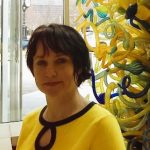
Olga Amarie
PhD — Professor of French, Georgia Southern University
Program: Nicolas Anciaux: A French Hero of the American Revolution
A newly illuminated chapter of Georgia’s Revolutionary history, centered on the rediscovery of Nicolas Anciaux’s gravesite and the remarkable story of this little-known French figure whose life connects Georgia to broader Atlantic world history.
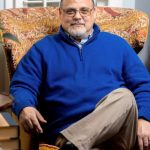
Greg Brooking
PhD — Historian of Colonial and Revolutionary Georgia; Author of From Empire to Revolution: Sir James Wright and the Price of Loyalty in Georgia
Program: Sir James Wright and Loyalism in British America
A fresh examination of Georgia’s last royal governor, revealing how loyalism, diplomacy, and political tension shaped the colony in the turbulent years preceding the Revolution.

Alyssa Canepa
MFA — Lecturer of First-Year Writing, Georgia Southern University
Program: We Write Well: Reclaiming Our Names
A multimedia storytelling experience that explores the reclamation of identity and voice, drawing on Canepa’s work with systems-impacted writers.
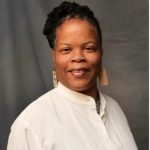
Lisa Bratton
PhD — Associate Professor of History, Tuskegee University; Oral Historian of the Tuskegee Airmen
Program: Georgians of the Famed Tuskegee Airmen
A comprehensive look at the Georgians who served among the Tuskegee Airmen, tracing the Airmen’s domestic and overseas experiences, the roles of women, the program’s development, and personal insights drawn from Dr. Bratton’s interviews.

Robert S. Davis
MA — Professor Emeritus, Wallace State College; Author of Georgia Citizens and Soldiers of the American Revolution
Program: Gone For a Soldier: Austin Dabney, a Black Georgian Teenager Fights for the American Revolution
A vivid portrait of Austin Dabney, the Black Georgia patriot whose Revolutionary War service and legacy made him a state folk hero.
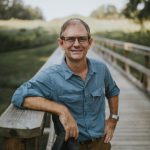
Gordon Johnston
PhD — Professor of English, Mercer University; Author of Seven Islands of the Ocmulgee
Program: A River Runs Through Us: Stories from Georgia Watersheds
A narrative performance blending ecology, history, and personal story to explore how Georgia’s waterways shape memory, community, and imagination across generations.

Gene Kansas
MS — Founder & CEO, Gene Kansas Commercial Real Estate; Historic Preservation Leader; Author of Civil Sights: Sweet Auburn
Program: History for the Future: A Purpose-Driven Book Tour of Civil Sights
A compelling look at why preserving Sweet Auburn’s historic spaces matters for Georgia’s past, present, and future.

Mark Wallace Maguire
Author, Journalist, and Writing Instructor
Program: Writing Our Roots: Discovering the Georgian Voice
An interactive creative writing workshop guiding participants to explore place, memory, and personal identity as elements of Georgia’s cultural landscape.

Kaye Lanning Minchew
MA, MS — Historian and Author; Director of the Troup County Historical Society & Archives for 32 years
Program: Franklin Delano Roosevelt in Georgia
Presented with Executive Producer Daniel White and featuring a screening of A President in Our Midst, this program explores FDR’s deep connection to Georgia.

Michael P. Morris
PhD — Professor of History, College of Coastal Georgia
Program: Mary Musgrove: Georgia’s Co-Founder
A nuanced interpretation of Mary Musgrove’s essential role in Georgia’s founding, highlighting her diplomacy, cultural fluency, and significance as a bridge between Indigenous and colonial worlds.
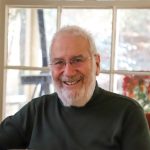
Abraham Tesser
PhD — Professor Emeritus of Psychology, University of Georgia; Studio Furniture Maker
Program: Jewish Identity: A Woodworker’s Celebration
An illustrated presentation on how handcrafted furniture serves as a vessel for memory, cultural continuity, and the transmission of Jewish identity.

Richard Utz
PhD — Professor & Senior Associate Dean for Strategic Initiatives at the Ivan Allen College of Liberal Arts, Georgia Institute of Technology
Program: Medieval Atlanta
Using the active reception of medieval culture in nineteenth- and twentieth-century architecture and literature in and around Atlanta, this program offers a panoramic view of the south’s indebtedness to medieval European roots.

Darius Wallace
Nationally Touring Actor, Storyteller, and Interpreter of Frederick Douglass
Program: Frederick Douglass! The Lion of Freedom!
A dynamic, K-12- friendly, one-man performance bringing Douglass’s life, words, and democratic vision into vivid presence.

James “Trae” Welborn III
PhD — Associate Professor of History, Georgia College & State University
Program: Red, White, and ’Cue: Georgia History Through Barbecue
A flavorful and surprising journey through barbecue traditions that illuminate Georgia’s social, cultural, and civic history.

Joyce White
PhD — Assistant Professor of English, Georgia Southern University; Interim Director, Gullah Geechee Cultural Heritage Center; Scholar of Gullah Geechee Literature
Program: Haints, Saints, and Sinners: The Timelessness of Gullah Geechee Culture and History
A rich exploration of the enduring presence of Gullah Geechee communities in Georgia—their stories, spiritual traditions, cultural expressions, and profound influence on the state’s identity.
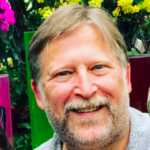
Paul Root Wolpe
PhD — Raymond Schinazi Professor of Bioethics; Founding Director, Center for Peacebuilding and Conflict Transformation (PACT), Emory University
Program: Bridging the Divide: How We Can Bring Back Civil Discourse and Unify Our Fractured Communities
A compelling presentation that draws on Dr. Wolpe’s global study of peacebuilding centers to offer practical, values-based strategies for rebuilding trust, strengthening dialogue, and bridging ideological divides in our fractured civic landscape.
FOR COMMUNITY HOSTS
- Hosts choose from a curated roster of presenters, listed above
- Hosts then coordinate directly with their selected speaker to set up a date, time, and location
- After confirming with their speaker, hosts complete Georgia Humanities’ online event application
- Please allow four weeks for our team to confirm the event application
- A completed application ensures that speakers are compensated appropriately
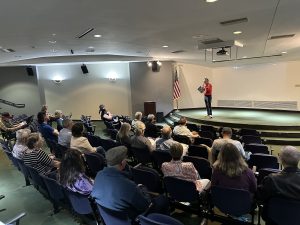 We’re looking for organizations that bring people together around shared ideas and experiences through free public programming. If your organization hosts lectures, workshops, cultural events, or community gatherings, you’re a perfect fit for the Georgia Circuit.
Ideal hosts include:
- Public libraries and library systems
- K–12 schools and colleges
- Museums, archives, and cultural centers
- Historical societies and civic organizations
- Arts councils and community-based nonprofits
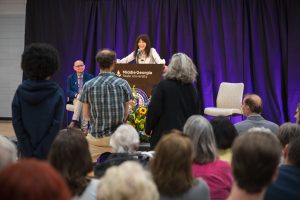
To support equitable access to humanities programming across Georgia’s diverse communities, Georgia Humanities offers Georgia Circuit programs on a sliding-scale basis that reflects organizational size, capacity, and available program funds. Host organizations are encouraged to plan ahead, as program availability is limited and scheduled on a rolling basis with attention to geographic distribution and statewide reach.
Submission of an application does not guarantee approval and is contingent upon speaker availability and the availability of Georgia Humanities program funds.
Annual Booking Limit (2026)
To ensure broad statewide access, each organization is eligible for one (1) free or reduced-cost Georgia Circuit booking in 2026.
Additional public program bookings within the same calendar year may be approved at Georgia Humanities’ discretion and, if approved, will be charged at the corporate host rate of $500 per program, regardless of organizational type.

Georgia Humanities is committed to ensuring that communities across Georgia—regardless of size, geography, or budget—have access to high-quality humanities programming. The Georgia Circuit helps extend that access by offering presentations to nonprofits and public-serving organizations at free or low-cost rates, while larger institutions and businesses help sustain the program through a sliding scale fee structure.
To uphold the spirit of statewide access, hosts receiving Georgia Circuit programs are expected to make their events free and accessible to the public, unless otherwise approved in writing by Georgia Humanities.
Unless specifically authorized by GH:
- Programs must be free and open to the general public
- Programs may not require paid registration, admission, membership fees, or required contributions
- Programs should be promoted in ways that welcome broad community participation
Closed-audience or fee-based engagements—for example, internal business events, member-only programs, or paid-attendance gatherings—may be approved on a limited basis and will incur additional host fees, with priority always given to opportunities that advance public access and community benefit.
2026 Host Site Fee Tiers
Fee: $0
GH Covers: Full $300 honorarium + travel stipend
Eligibility: Volunteer-led organizations or operating budgets under ~$250,000
Purpose: Guarantees access for communities with the fewest resources
Fee: $150
Cost Share: GH covers half of the honorarium + travel stipend
Eligibility: Annual operating budgets roughly $250,000–$2 million
Purpose: Shared responsibility keeps the program sustainable while minimizing barriers
Fee: $300
Cost Share: Host site covers the full honorarium; GH covers travel stipend
Eligibility: Organizations with budgets above ~$2 million
Purpose: Aligns with national humanities norms and recognizes institutional capacity
Flat Fee: $500
Cost Share: Host covers the full honorarium + contributes to statewide program sustainability; GH covers travel stipend
Purpose: Ensures that corporate and civic partners help underwrite The Circuit, expanding access for small communities across Georgia
While The Georgia Circuit is primarily intended to support free and public programs, GH may approve, on a limited basis, closed-audience or paid programs for businesses, corporations, or professional associations.
Examples include:
- Employee-only or internal staff programs
- Member-only or invitation-only events
- Programs requiring paid registration or attendance fees
Closed-audience programs:
- Must be approved in advance and confirmed in writing by GH
- Must align with GH’ nonpartisan public mission
- Are subject to additional host fees beyond the $500 Tier 4 rate, as determined by GH
These additional fees reflect the private benefit of the engagement and serve as earned support for GH and The Georgia Circuit, helping subsidize free and reduced-cost public programming for communities across the state.
Final host fees for closed-audience programs will be established and confirmed prior to scheduling or promotion.
Additional Opportunities
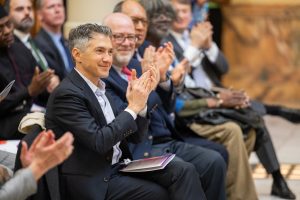
Organizations wishing to further support statewide humanities access may participate as The Georgia Circuit Sponsors at levels beginning at $1,000.
Sponsorships are acknowledged in printed and digital program materials, on the GH website, and at Circuit events, as appropriate.
These contributions help subsidize free and reduced-cost programs for rural and under-resourced communities across the state.
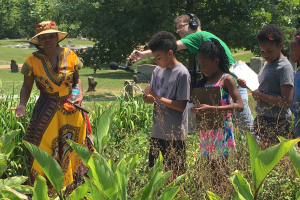 Any host site—nonprofit or corporate—may choose to contribute above their assigned tier to help make programs available for organizations with limited resources. Pay-It-Forward funds directly subsidize honoraria for rural libraries, historical societies, and small cultural nonprofits.
FAQs
Georgia Humanities invites proposals from Georgia-based individuals including—but not limited to—historians, folklorists, musicians, artists, culture bearers, writers, museum professionals, humanities scholars, and performers.
We’re seeking applicants who have strong experience in public speaking, teaching, performance, or facilitation; deep knowledge and enthusiasm for their topic; and are willing to travel throughout Georgia presenting to audiences of varying ages and backgrounds.
Selected presenters will accept 4-5 speaking engagements in a calendar year and must be able to deliver inclusive, nonpartisan programs that serve all Georgia communities.
Please see the section “How to Apply to be a Host” above or in our program guide.
Each speaker may schedule four to six programs through December 2026. Availability varies, so please contact the speaker directly or Georgia Humanities for assistance.
Requests may be denied if programs are not open to the public or if the speaker has reached their annual program limit.
Please allow four to six weeks for processing.
Georgia Humanities will provide publicity guidance and a press release template.
Speakers are paid directly by Georgia Humanities after the program.
Yes. Georgia Circuit programs may be offered in person, virtually, or in a hybrid format, depending on the speaker’s presentation style and the host organization’s capacity. Hosts should confirm format options directly with the speaker prior to submitting an application.
Host organizations are responsible for making reasonable accessibility accommodations to ensure programs are welcoming and inclusive. This may include wheelchair-accessible venues, assistive listening devices, captioning for virtual programs, or other accommodations as requested by audience members. Georgia Humanities encourages hosts to plan for accessibility as part of their program design.
Yes. Organizations are welcome to co-host Georgia Circuit programs. One organization should be designated as the primary host and submit the application on behalf of the partnership. Responsibilities for logistics, promotion, and reporting should be clearly agreed upon in advance.
Host organizations must complete a final report no later than 30 days after the program. The report is submitted through the Georgia Humanities Grant Portal and includes basic attendance information, program details, and a brief evaluation of the event.
Low attendance does not automatically affect approval or future participation. Georgia Humanities understands that audience turnout can vary due to weather, scheduling, or other factors. Hosts are encouraged to make a good-faith effort to promote the program and document outreach efforts in their final report.
Eligible travel expenses may include mileage, lodging, meals, and other reasonable costs associated with travel to and from the program site, in accordance with Georgia Humanities reimbursement guidelines. Speakers will receive specific instructions with their agreement materials.
If weather, travel issues, or other unforeseen circumstances require a program to be postponed or canceled, please contact Mary Wearn immediately at mwearn@georgiahumanities.org. Georgia Humanities will work with you and the speaker to determine next steps, including rescheduling the program for an alternate date when possible.
Stay Connected
For questions about the Georgia Circuit, please contact Mary Wearn, and sign up for our newsletter to receive updates about application cycles.